What Is a Lala Company — and Should You Work in One?
The term Lala company doesn’t appear in any McKinsey report. But ask anyone who’s worked in Indian business outside the…

We’re told that hard work pays off in corporate India. That if you show up early, stay late, and never take a break, success will find you. It’s a myth wrapped in pride, passed down like a family secret. And it’s not just a belief, either. It’s actually baked into the culture. You don’t get promoted because of your performance. You get promoted because someone trusted you enough to keep you around. Or because loyalty outweighed competence.
I’ve seen this play out over the years in corporate India across sectors: IT services, finance, e-commerce, logistics, and even startups that claim to value innovation. The toxic grind isn’t optional. And when it doesn’t work? You’re told you’re not cut out for the job. If such workplace toxicity is draining your ambition, health and sanity, know that you’re not alone. The patterns you see every day are systemic.
Burnout isn’t just about being tired. It’s a slow collapse of energy, focus, and ultimately, self-worth. And it’s spreading faster than anyone admits. A 2025 survey by Blind found that 83% of IT workers report burnout symptoms, with 72% regularly working beyond the legal 48-hour weekly limit. Some are logging over 70 hours a week. That’s not stress. That’s erosion.
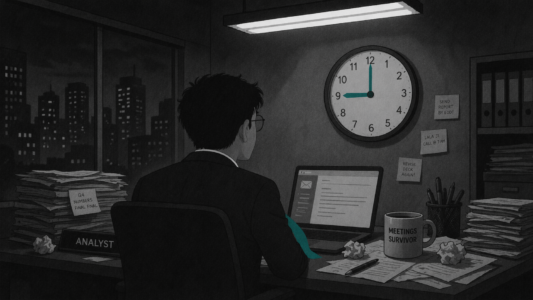
I’ve personally seen teams where employees stayed late not because work demanded it, but because leaving at 6 PM signaled disloyalty. One manager would nonchalantly pass remarks like “you’re not really working until you’re in the office after 8.” That wasn’t about productivity. It was about control. They don’t care if you efficiently wrap up your tasks within an 8 or 9 hour-workday. You are simply discouraged from having a fulfilling life after work.
The problem isn’t just long hours. It’s how they’re managed. Managers demand updates every two hours, even for things like coffee orders or lunch plans. Deadlines shift mid-week without notice. A project that was supposed to finish by Friday gets expedited to Thursday, then Wednesday. And when someone misses a deadline? The criticism comes out loud: in meetings, on Slack, often in front of the whole team. But praise? That’s always private. You get it in a one-on-one, never in a group chat.
Excessively controlling leadership isn’t just bad management. It’s a pattern designed to keep people anxious and compliant. And when that happens, trust dies fast. LinkedIn’s 2024 Workforce Confidence Survey showed that 69% of employees leave because of toxic leadership — not lack of skills or poor pay, but because they felt unseen, unheard, and distrusted.
I’ve seen it in action at a mid-sized firm where the head of operations would review every email sent by junior staff. Not to assess content but just to ensure if someone was on the job. One employee told me their manager once said: “If you’re not sending updates, you’re not working.” Bluntly speaking, this is surveillance disguised as oversight.
In the upper circles of India’s corporate firms, favoritism isn’t considered a flaw, but an unwritten rule understood by every employee. Promotions go to those who’ve been around longer, or who know the right people. Not those who deliver results.
At a former company, someone privately shared with me that the higher management had said they were not ready for leadership, even though they’d led projects successfully. The real reason? They weren’t currying favor with a senior executive.
This kind of behavior is unfair and destructive to employee morale. The Gallup Global Workplace Report 2024 highlighted that more than 60% of Indian employees felt there were no growth opportunities in their roles. That means people stay stuck, not because they lack talent, but because the system doesn’t offer paths forward.
India’s corporate employees have come to accept the always-on culture pushed by their management. You’re expected to respond to messages and calls after hours. And not just on weekdays. These work-related communications and the so-called urgent tasks spill over to weekends and holidays too. A 2024 Indeed India survey found that 90% of employees are contacted outside office hours, and 85% say it happens even when they’re sick or on vacation.
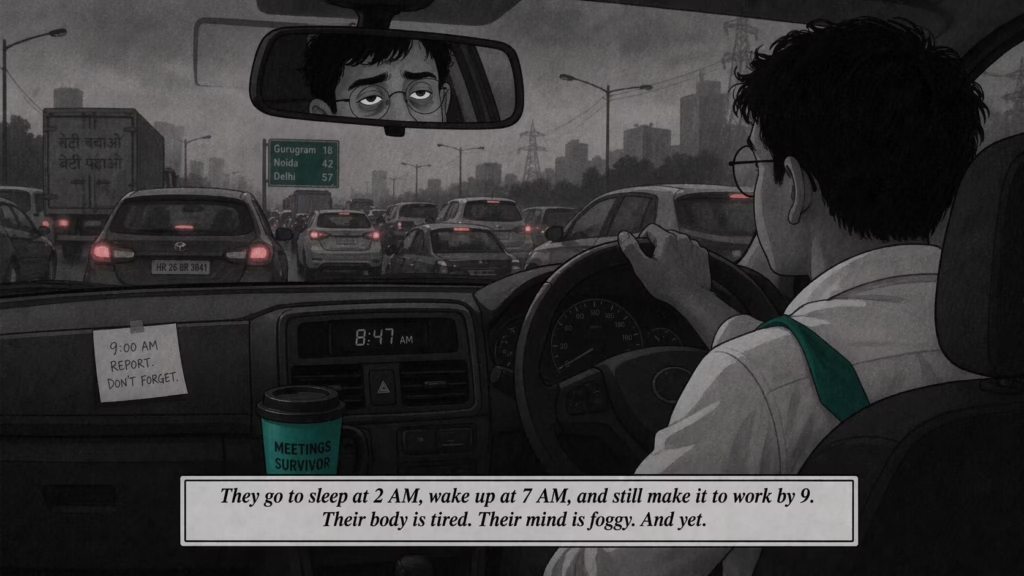
I know someone in Bengaluru who works between 14 to 16 hours a day. They go to sleep as late as 2 AM, wake up at 7 AM, and still make it to work by 9 AM. Their body is tired. Their mind is foggy. And yet? They’re still expected to be available on-call. When I ask how they’re doing, their reply is invariably along these lines: “I’m just surviving.” An empathetic manager would see this not as resilience, but as quiet surrender.
Beyond platitudes and performative workshops, Indian corporate culture encourages complete silence on the topic of mental health. Talking about anxiety or depression is still seen as weakness. Many employees don’t speak up until they’re in crisis. And by then, it’s often too late. NIMHANS reports that 10.6% of Indian adults suffer from mental health issues, but 70%–92% go untreated due to stigma or lack of access.
I’ve known many troubled colleagues during my corporate stints who say things like: “I don’t want to be a burden.” Or, “If I talk about it, they’ll think I’m not serious,” fearing the implications of their mental health confessions. That fear isn’t just personal — it’s institutional.
Founders and senior executives glorify overwork and exhaustion as a badge of honor. This culture doesn’t allow for emotional honesty. So people hide. They bottle up frustration. They pretend everything is fine. Until they can’t anymore. The consequences range from chronic anxiety and depression to substance abuse — and in extreme cases, tragedy.
The Right-to-Disconnect Bill, introduced in the Indian Parliament in December 2025, is a step forward but it won’t fix the deeper issues. Legal changes don’t change behavior when the incentives are still wrong. If staying late and being available is rewarded, then rest becomes a liability.
The truth is, this isn’t just about fixing policies or training managers. It’s about changing what success means. Until companies start rewarding consistent performance over performative presence, and creative problem-solving over continuous hustle, the grind will continue.
Toxicity persists because it benefits those in power. The people who stay late, who work through crises, who never take a vacation — they’re not just surviving. They’re being rewarded for staying in place. And that’s how systems stay broken.
Even assuming the management is listening, toxic workplaces don’t improve overnight. Still, you must make the most of the opportunities they offer while you plan your next move. Your goal shouldn’t be fixing the culture — it should be protecting your leverage. Adopt some strategies to change your position within the toxic system.
The biggest action you can start taking is building visible, documented output. Maintain a private log of projects delivered, feedback received, and measurable results. Not just for your daily updates and your quarterly appraisals. Because when credit is stolen or blame is misplaced, evidence matters.
If you still suspect you’re not being treated fairly, start looking elsewhere. This means developing personal leverage. Sharpen skills that are transferable, strengthen your professional network, and build a financial runway where possible. Optionality reduces fear.
Most importantly, invest your energy in work that is traceable and valuable. Stop rewarding performative presence. Don’t stay late to signal loyalty.
Corporate India’s toxic culture isn’t just a failure of management; it’s a reflection of deeper societal values that prioritize productivity over people. The grind myth has created an environment where burnout is normalized, mental health is stigmatized, and rest is seen as weakness. But the tide is turning. Many Gen Z and millennial employees in India are challenging these workplace behaviors, demanding better leadership, reclaiming their right to work-life balance, and breaking free from the cycle of toxic work.
So, the question isn’t whether we can change the system. It’s whether we’re willing to stop pretending that working harder is a sign of strength and are willing to fight for a healthier, more humane workplace. Just remember this: Systems don’t change because people feel burnt out. They change when enough people quietly stop rewarding toxic incentives.